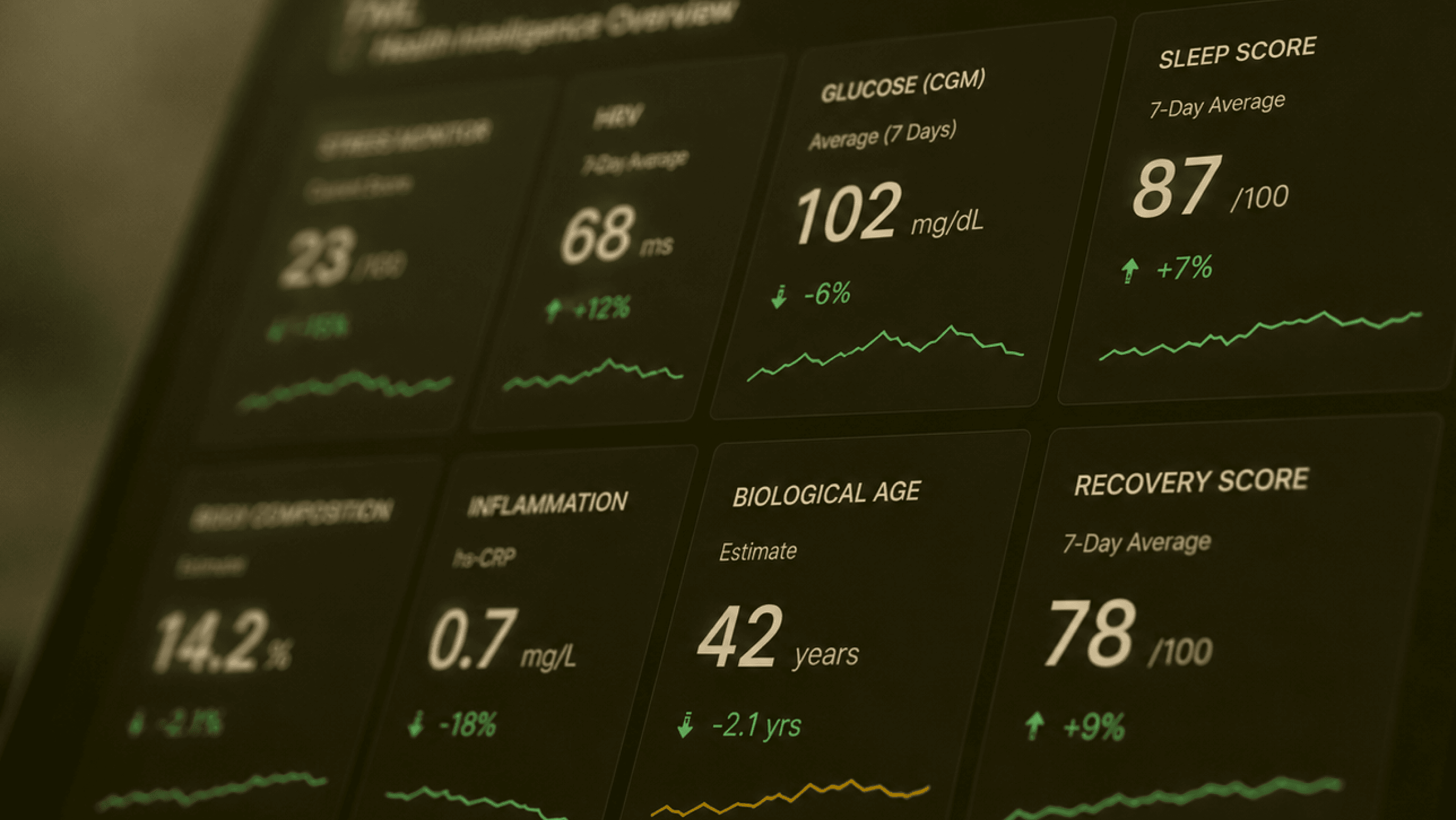
One of the biggest weaknesses in traditional healthcare is that it is built around encounters rather than continuity. A member comes in, gets evaluated, receives a plan, and then leaves. But the biology does not pause between appointments. Sleep changes. Glucose patterns shift. Motivation fades. Recovery, stress, movement, and behavior either improve or drift. The space between visits is not empty. It is where much of health is actually built. This is where digital support becomes so important in longevity care. A well-designed digital layer extends care into the part of life where most decisions are actually made. It can reinforce physician recommendations, support behavior change, help members interpret day-to-day signals, and keep care from becoming a set of isolated clinical moments. In that sense, digital support is not a convenience feature. It is how continuity becomes operational.
More Tools, More Data, More Confusion
Modern longevity care increasingly uses more sophisticated tools. Members may have advanced bloodwork, body composition testing, sleep tracking, wearable recovery metrics, continuous glucose monitoring, or other forms of cutting-edge diagnostics. Those tools can be valuable, but they create a new problem: they generate far more information than most people know how to use. Without support, more data easily becomes more confusion. A member sees a glucose spike, a low readiness score, a poor night of sleep, or a borderline biomarker, and has no framework for whether it is meaningful, whether it is expected, or whether it should change behavior. Data without continuity tends to produce anxiety or disengagement rather than insight. The clinical judgment that separates signal from noise is the subject of Why Physician-Led Interpretation Matters.
What a Digital Layer Actually Does
This is where an AI health companion, or a similar digital support system, becomes genuinely useful, when it is part of a physician-led model. Its role is not to replace medical judgment. Its role is to help the member stay connected to the care plan between visits: reinforcing the reasoning behind a recommendation, organizing data into something easier to understand, answering low-friction questions, and supporting the repeated behavior patterns that actually shape long-term outcomes.
Implementation Is Where Plans Decay
That support matters because most members do not fail for lack of information. They fail because implementation decays. The physician may make the right recommendation. The member may understand it clearly in the moment. But then life resumes. Work gets busy. Sleep gets worse. Travel happens. Stress builds. Meals drift. Exercise becomes inconsistent, and the recommendation fades into abstraction. Digital continuity reduces that decay. It keeps the plan from disappearing once the appointment ends, and it keeps the member oriented to what matters now, what is changing, and what the next small step should be. That is what makes insight translate into action, and action is where most health plans succeed or fail. The broader case for that timescale is made in Why Continuity Matters in Longevity Care.
Personalization Means Relevance, Not Volume
Personalization should not mean simply having more data. It should mean the data are relevant to the individual and connected to the decisions they actually need to make. One member may need support around glucose variability and meal timing. Another may need support around sleep consistency, recovery, and overtraining. Another may need help understanding how changes in ApoB, body composition, and stress load fit together. Digital support keeps that context visible in a way generic wellness content cannot.
Making Continuous Monitoring Usable
It also improves the value of continuous health monitoring. Continuous data streams, whether from wearables, glucose monitors, or repeated at-home measurements, can reveal early drift that episodic care misses. But that only becomes useful if the member can engage with the information without being overwhelmed by it. A digital support layer contextualizes trends, identifies patterns worth noticing, and keeps attention on what is clinically meaningful rather than what is merely novel.
“To my mind, any tool that helps inspire change and keeps you motivated to stay on the path is worth incorporating into your life. That’s not to say one should live or die by the numbers, but use them as a guide, to increase your awareness of your body, how it works and how it responds.” — Frank Lipman, MD, “7 Ways Tracking Your Heart Rate Variability Can Save Your Health,” drfranklipman.com (November 2021) A guide rather than a verdict. That distinction is the entire design brief for digital support.
The Technology Supports Continuity; the Physician Leads Care
Not every metric deserves constant attention. One of the risks of poorly designed digital health is that it encourages obsession with fluctuations that may not matter. A good support system should reduce noise, not multiply it. It should help members understand what deserves attention and what does not, and it should support physician-led interpretation rather than compete with it. Digital support is useful because it strengthens the physician-led model, not because it replaces it. The physician remains responsible for clinical interpretation, risk stratification, and decision-making. The digital layer exists to help the member live inside the care plan more consistently. The technology supports continuity; the physician still leads care. This becomes especially powerful when members are making gradual changes rather than dramatic ones. Longevity rarely improves because of one large intervention. It improves through a sequence of smaller wins repeated over time: better meal timing, more consistent movement, stronger recovery, improved sleep, better adherence, and a clearer understanding of why a behavior matters. Digital support reinforces those small wins and keeps them connected to the larger strategy. Organizing all of it into a coherent clinical picture is the work described in What Is Health Intelligence.
What This Does Not Mean
This does not mean that an AI health companion can replace a physician, that more tracking is always better, or that a digital tool can diagnose anything. Software cannot weigh a member’s history, examine them, or take responsibility for a clinical decision. It means that when technology is designed to serve a physician-led plan, it can make that plan considerably easier to live inside.
The TML Lens
At The Maximum Life, digital support matters because health is shaped between visits, not only during them. The role of an AI health companion is to help members stay connected to their care plan, their data, and their next best actions in a way that supports physician-led longevity rather than replacing it. Used well, it reinforces physician recommendations, improves continuity, and makes complex data more usable between appointments. Its greatest value is not replacing care, but helping care continue. Explore the TML member journey
The Bottom Line
Longevity care does not happen only during appointments. It is shaped by what happens between visits, in sleep, movement, stress, nutrition, and everyday choices. Digital support keeps the care plan active, makes complex data easier to use, and supports more consistent follow-through as part of a broader physician-led strategy. Digital support is the final pillar of a larger model — the full picture is in Physician-Led Longevity and the Rise of Health Intelligence.
References
- Topol EJ. High-performance medicine: the convergence of human and artificial intelligence. Nat Med. 2019.
- Blease C, Kaptchuk TJ, Bernstein MH, et al. Artificial intelligence and the future of primary care. PLoS Med. 2019.
- Hood L, Friend SH. Predictive, personalized, preventive, participatory medicine. Nat Rev Clin Oncol. 2011.