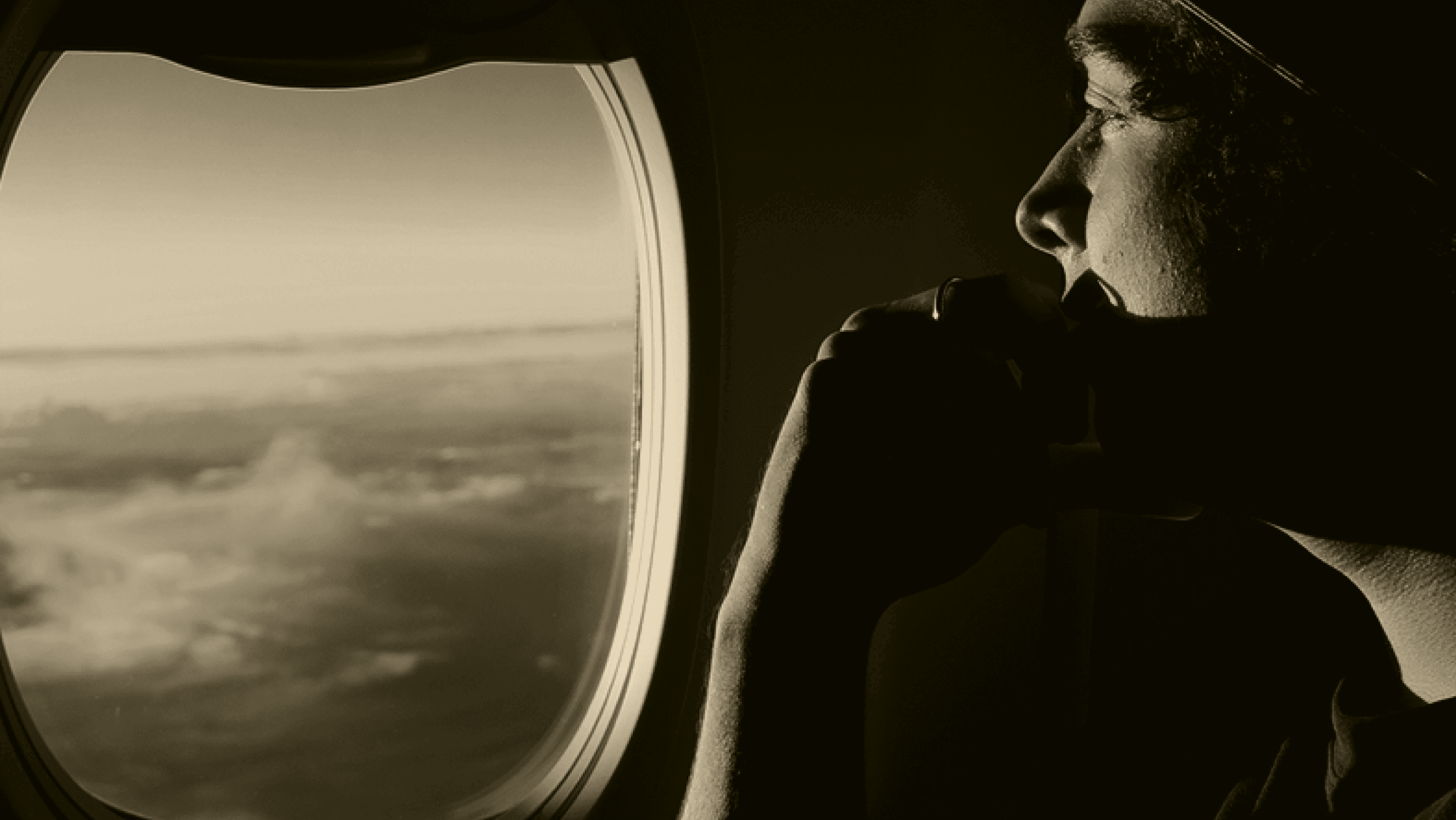
Flying is one of the most physiologically disruptive things a modern person does. Cabin pressure, radiation exposure, circadian disruption, dehydration, immobility, and poor food choices all stack into what researchers often call travel stress. If you track HRV (heart rate variability), you may see it there. The good news is that a few small, strategic interventions can dramatically change how you land, sleep, and recover.
Before You Fly: Set the Clock Early
Your goal is to start living on destination time before you even land.
- Time your sleep to your destination. If it will be nighttime where you are going, try to sleep on the plane. If it will be daytime there, stay awake.
- Choose a window seat when possible. Light is one of the strongest circadian signals you can help your body with.
- Use sleep aids strategically, not randomly. Melatonin, Happy Aging Sleep or prescription agents can help, but they should be timed to destination bedtime, not just taken out of habit.
Fast or Use Food Timing to Reduce Jet Lag
Meal timing is one of the most underused tools in travel physiology.
- Consider fasting during the flight. Circadian researchers like Satchin Panda have highlighted that fasting in transit may help reduce jet lag and improve metabolic alignment - it allows your body to focus on everything else that’s already happening, rather than processing a heavy meal.
- If you do eat, keep it clean and simple. Aim for anti-inflammatory, high-protein, higher-fat, lower-glycemic foods.
- Avoid the usual travel traps: high-sodium foods, alcohol, and simple carbohydrates. These worsen dehydration, sleep quality, and glucose control.
- Eat on local time as soon as possible. Once you land, start eating according to the new clock.
Hydrate Like It Matters, Because It Does
Cabin humidity is typically only 10 to 20%, compared with roughly 30 to 65% in normal indoor environments. That dries you out fast.
- Hydrate before boarding. Don’t wait until you feel thirsty in the air.
- Electrolytes can help, especially on long-haul flights or if you tend to feel depleted when traveling.
- Excellent one is also to try a Hydrogen capsule to put on the water as there’s research that shows structured water may help support hydration and mineral absorption
Move the Minute You Land
Exercise is one of the most practical circadian tools available and it will help your body shift out of jet lag.
- Take a 20 to 30 minute outdoor walk or easy jog after arrival. This is one of the most evidence-backed jet lag interventions.
- It works because it combines light exposure, movement, temperature signaling, and cortisol normalization.
- Avoid crushing workouts in the first 24 hours if you are severely sleep-deprived or jet lagged. A gentle sauna session may also help some travelers recover.
A Simple Longevity Travel Stack
For people who tolerate supplements well, a basic travel stack may include:
- Melatonin (0.5 to 1 mg) for circadian reset
- Magnesium glycinate (200 to 400 mg) for sleep quality and muscle relaxation
- Vitamin C (1 to 2 g) for antioxidant and immune support
- Electrolytes or molecular hydrogen tablets/capsules for hydration support
- NAC or glutathione for oxidative stress support
Bottom Line
Flying does not have to wreck your biology. You can use a few of these tips to support your body as it adjusts and land in a completely different physiologic state than the traveler who wings it. You do not need a perfect protocol. You just need a few smart interventions that help your body arrive where your plane already did.